The fastest business to contact a lead wins. Not the best script. Not the best closer. Not the best offer. The fastest.
A 2007 lead-response study found substantially higher odds of contacting and qualifying web-generated leads when the first call attempt came at five minutes rather than thirty minutes. After that, the odds drop fast. An hour later, they've moved on. A day later, they've forgotten about you. A week later, they're talking to your competitor.
But speed alone isn't enough.
You also need a system. Because being fast once doesn't matter if you're not consistent.
Here's what a real lead follow-up strategy looks like.
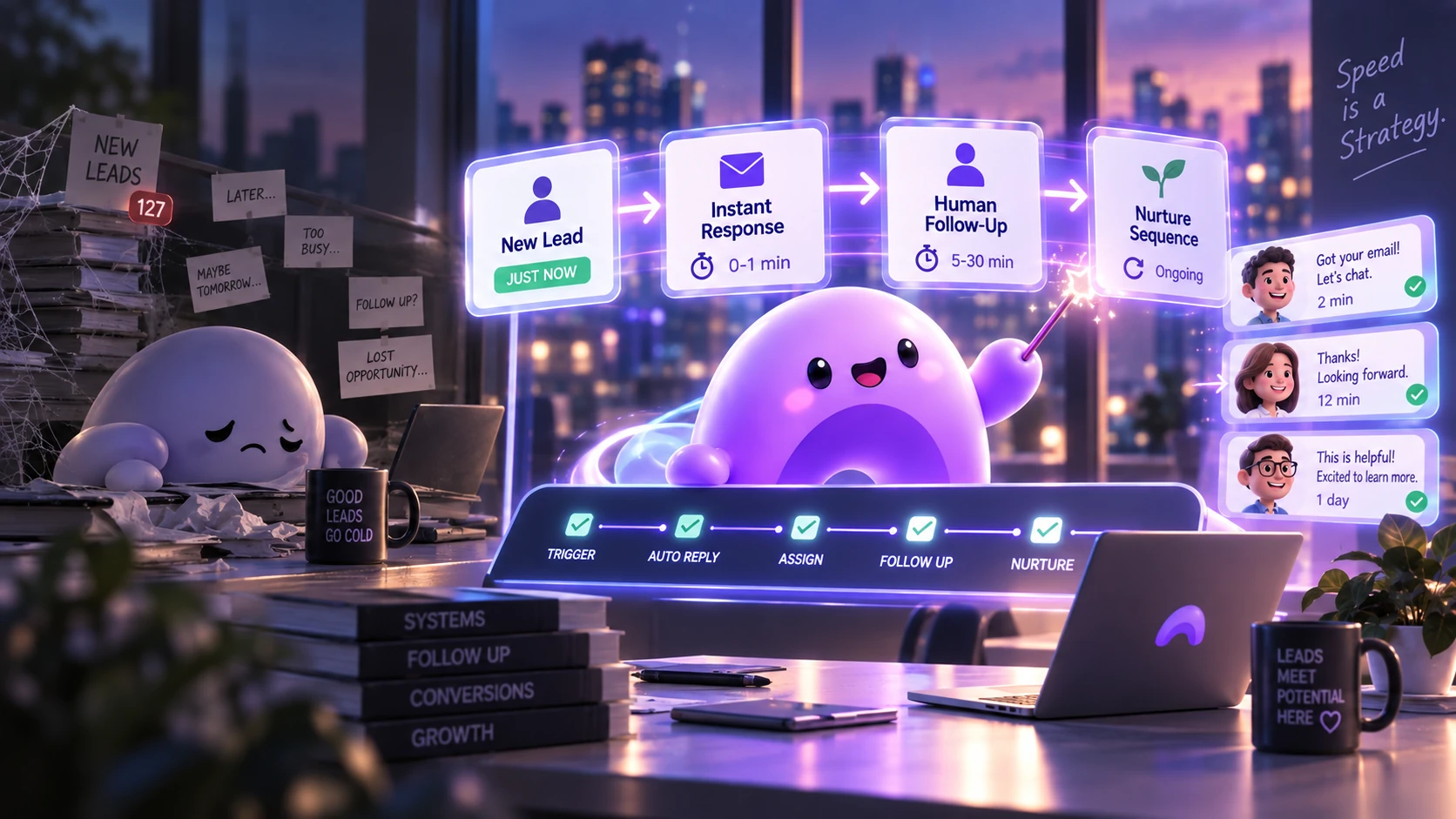
A lead comes in. Within minutes, they get an automated response acknowledging that they reached out. Within hours, a human contacts them. Not a generic "thanks for your interest" message. A real, personalized contact that references what they did and moves them to the next step.
If they don't respond, the system follows up again. And again. Not randomly. On a cadence that's designed to stay top of mind without being annoying. Every touchpoint is tracked in the CRM so you can see who's been contacted, who's responded, and who's gone cold.
If they're not ready to buy, they enter a nurture sequence that keeps them engaged over time. If they are ready, they get moved to a call immediately. No leads sitting in limbo. No leads forgotten. No leads falling through the cracks.
The businesses that win at follow-up aren't the ones with the most skilled salespeople. They're the ones with the most reliable system. Because skill is inconsistent. Systems are consistent. And consistency beats skill every time.
A follow-up cadence you can start with.
Here's a simple two-week cadence for a new inbound lead. Treat it as a starting point. Your sales cycle, your channels, and your buyers decide the right spacing.
Right away: automated acknowledgment. Confirm you got their inquiry, say who will reach out, and say when.
Same business day: first human contact. Call first. If they don't pick up, send a short personal email or text that references what they asked about.
Day 2: second attempt. Call at a different time of day than the first try.
Day 4: a useful email. Answer a question buyers usually ask before they commit. Give them something worth reading, not a reminder that you exist.
Day 7: call and a short message. Keep it brief and offer a specific time to talk.
Day 14: close the loop. Ask if they want to keep talking or hear back later. If there's no reply, move them to nurture and note why in the CRM.
Only use channels the lead has agreed to be contacted on. And when someone replies at any step, the cadence stops and a real conversation starts.
What to say at each step.
Good follow-up is specific. Here are three short templates to adapt. Replace the brackets with real details.
First human contact: "Hi [name], it's [your name] from [company]. You asked about [service] earlier today. I have two quick questions so I can point you to the right option. Do you have ten minutes today or tomorrow?"
Useful email: "Hi [name], a question people often ask us before getting started is [question]. Here's the short answer: [answer]. If that's on your mind too, reply and I'll walk you through how it would work for you."
Closing the loop: "Hi [name], I haven't heard back, so I'll assume the timing isn't right. Should I check back in a month, or close this out for now? Either answer is fine."
A worked example.
Say a team gets 40 inbound leads a month. On a busy week, first replies go out the next morning. Anyone who misses the first call gets maybe one more try. Nobody tracks it, so it feels like follow-up is happening.
Now pull the numbers from the CRM. How many of those 40 leads got fewer than three attempts? Say it's 22. Those 22 didn't say no. Nobody asked them a second or third time.
Put the cadence above in place and the question changes from "did anyone follow up?" to "which step gets replies?" If replies keep coming from the day 7 call, it's earning its place. If a step never gets a reply, change the message or drop the step. This is the most direct way to increase your lead conversion rate: stop losing people who already raised their hand.
Follow-up mistakes that cost you leads.
"Just checking in" messages. They ask for attention and offer nothing back. Every touch should answer a question or offer a clear next step.
Stopping after one or two tries. People are busy. A missed call is not a no.
No clear owner. When leads land in a shared inbox, everyone assumes someone else replied. Every lead needs one person responsible for it.
Chasing leads who aren't a fit. Persistence pays off on the right people. Qualify on the first real conversation so your cadence goes to leads worth the time. Here's how to build a lead qualification system.
Automating the conversation. Automation should handle the acknowledgment, the reminders, and the scheduled emails. The first real conversation should come from a person.
How to run this in Ariyel.
Tasks give each follow-up an owner and a due date, and open tasks are grouped into Overdue, Today, Upcoming, and No due date, so missed follow-ups are easy to spot. Sequences handle the scheduled emails: you set each step's message and delay, and replies go to the connected mailbox of the person responsible for the conversation. A day delay counts calendar days within your sending window, not business days, so check how your cadence falls around weekends. To enroll a contact when something changes on a record, workflows include an Enroll in sequence action.
Lead follow-up FAQ.
How many times should you follow up with a lead? There's no single right number. Plan several attempts across a couple of weeks, like the cadence above, then move anyone who hasn't replied into nurture instead of deleting them. Your own CRM data will show which touches get replies.
How fast is fast enough? Minutes for the acknowledgment and the same business day for the first human contact. The study above compared five minutes with thirty, so if you can staff a faster first call, do it.
Should follow-up be automated? Automate the parts that depend on memory: reminders, scheduled emails, and moving leads into nurture. Our guide to business automation covers what to automate first. Keep the first conversation human.
What should you do with leads who never respond? Send a close-the-loop message, record the outcome in the CRM, and move them into nurture so they still hear from you when the timing might be better.
Most businesses at $50K to $150K a month don't have a follow-up system.
They have a follow-up intention. They mean to follow up. They tell their team to follow up. But there's no system enforcing it, tracking it, or making sure it actually happens. So it doesn't. And leads die.
At Ariyel, we build the follow-up system as part of the operating system. Automated first touch, human second touch, nurture sequence for the ones who aren't ready, CRM tracking for everything. Because the leads you already have are your cheapest source of revenue, if you actually have a system for working them.